
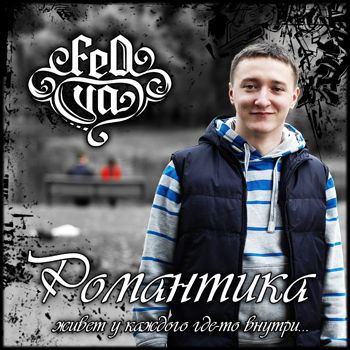

In 2008, a twenty-year-old poet in Cherkasy gathered twenty-two poems he had written since the age of sixteen and planned to publish them as a collection in print. The book never appeared. What remained is this: the twenty-two poems, in the order they were given, with a title that is also the title of one of the poems inside it.
The collection spans four years and more than one person. The earliest poems — written in 2004 and 2005 — predate the long relationship that dominates the later ones. In these early poems the addressee is often unnamed: a girl who said no, or said yes and then didn't, or was simply elsewhere when it mattered. Vitalina is named directly in "Последний стих" — "Ай, Виталина, я же так любил..." — and nowhere else. She appears for one poem and is gone. That is its own kind of honesty.
"Любовная Лирика" is the title poem, and it earns the title. It is the longest poem in the collection, written across six months from December 2003 to May 2004. It moves through the full arc of a failed relationship in five movements: the initial refusal, the gratitude, the bitterness, the night that followed, and the epilogue. The epilogue quotes Hamlet directly — "Быть или не быть? Вот в чем вопрос" — and means it without irony, as the most accurate language available for what romantic loss felt like at seventeen. That earnestness, completely unironic, is the collection's core quality. It does not protect itself.
The pivot in the collection comes with Yulia. Around 2005–2006, the poems change register. The addressee acquires a name. "Из под слоя пыли…" names her twice in the same stanza — "Юля, я тебя люблю, души не чаю... / Юля, я так сильно, очень сильно без тебя скучаю..." — and the repetition is not decorative: it is the thing being said, the only thing. By "Стираются фото...", she is physically distant, living elsewhere, and the poem transforms that distance into metaphor: clouds become messengers, the sunrise becomes a courier, the poem itself becomes "guitar notes" that will travel across the distance. The song form is being invented here, years before the Романтика album would be recorded.
The chorus of "Стираются фото..." is word-for-word the same as the chorus of "Из под слоя пыли…". The relationship continues; the refrain is its signature. This is not repetition as accident. The same words in a different poem, years later, in a different situation — long-distance now, absence instead of presence — show that the feeling has not changed shape, only its circumstances.
The last poem in the collection, "Твои Слёзы", speaks across the longest distance. The speaker is on a phone call. She is crying. He apologizes for the arguments, the stubbornness, for not calling enough, for not writing poems lately. He notes, almost in passing, that he has been faithful — "четвертый год" — four years. He is twenty years old. He has been in this relationship for four years. It is long-distance, she is crying, and he is writing the poem as the act of consolation he can manage across kilometers of silence. The collection ends there, not with resolution but with the fact of continued trying.
Formally, the collection is more varied than it appears. The early poems are uncontrolled in the productive sense — long, questioning, willing to follow a thought wherever it goes. The 2006–2008 poems have more formal awareness: refrains that repeat across poems, imagery (fading photographs, the sun as messenger) that builds rather than restates. The poet who wrote "Любовная Лирика" at seventeen and the one who wrote "Твои Слёзы" at twenty are recognizably the same person, but the later one knows more about what poems can do.
The unanswerable question is the collection's recurring engine. "Почему так получилось?" — why did this happen? "Что делать мне?" — what am I supposed to do now? These questions appear in poem after poem and never receive satisfying answers, because there are none. The poems are written because feeling has to go somewhere, because there is no other place to put it, because a black notebook can hold what conversation cannot. That was always what this collection was for.
The print publication didn't happen. But the curation did. These twenty-two poems were selected and ordered by the poet himself at twenty years old, with the intention that someone else would hold them. The shape is deliberate: 2004 to 2008, from first heartbreak to fourth-year faithfulness, from the unnamed girl who said no to the named one who is crying on the phone. Not a random gathering — a manuscript that was waiting.
| Title | Year | Actions |
|---|---|---|
| Ты не хочешь со мной серьёзных отношений? | 2004 | Open page |
| Любовная Лирика | 2004 | Open page |
| Любовная Лирика #2 | 2004 | Open page |
| Любовная Лирика #3 | 2004 | Open page |
| Летний вечер | 2004 | Open page |
| Любовь | 2005 | Open page |
| Последний стих | 2005 | Open page |
| Серые оттенки | 2005 | Open page |
| Ты просто улыбнись | 2005 | Open page |
| Ми намагаємось звільнитись | 2005 | Open page |
| Для самой ласковой | 2005 | Open page |
| Из под слоя пыли | 2005 | Open page |
| Небо потеряло краски | 2005 | Open page |
| Осень | 2005 | Open page |
| С Днем Святого Валентина | 2006 | Open page |
| Я приду туда | 2006 | Open page |
| Я с тобой, мы вместе | 2006 | Open page |
| Цветник | 2007 | Open page |
| Стираются фото | 2006 | Open page |
| Сон | 2007 | Open page |
| Ко Дню Святого Валентина | 2008 | Open page |
| Твои Слёзы | 2008 | Open page |