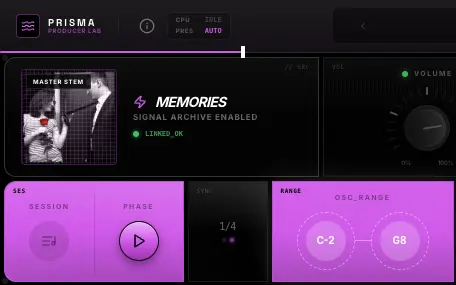
VST Interface
High-density chassis design.
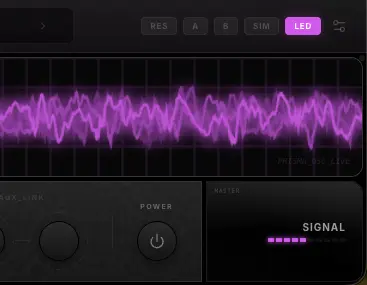
DSP Engine
Native Web Audio protocols.
PRISMA SKIN
Our flagship archival interface, replicating the tactile feedback and visual density of professional studio VST plugins.
Core Architecture
- Material Adaptive Layering
Switch between Industrial Metal, High-Gloss, or Textured Plastic chassis textures.
- Momentary Signal Logic
Tactical A/B signal path selectors with high-intensity visual feedback.
- Bi-Directional Potentiometers
Analog-feel knobs with technical calibration markers and multi-state LEDs.
- Precision LCD Telemetry
High-contrast readouts for track identification, metadata, and timecode sync.
- Integrated OSC Terminal
Real-time signal analysis with Simulation and Live native audio modes.
- Session Integrity Sync
Hardware state preservation across browser restarts for continuity.
Tactical Control Matrix
The Prisma suite utilizes a high-density hardware mapping protocol. Every switch and potentiometer serves a dedicated archival function.
Archival Reset
Momental trigger that re-calibrates all hardware parameters to studio baseline (0.8 Vol, 0% Reverb, Standard Material).
Signal Path Selectors
Toggles between the Modern Digital (A) and Archival Analog (B) signal processing chains. Path B requires hardware stabilization.
Analysis Protocol
Switch between low-latency Signal Simulation and real-time Web Audio API Native Analysis for the central oscilloscope.
Visual Intensity
Toggles high-intensity under-glow and signal projection protocols for maximum aesthetic impact in dark environments.
Precision Knobs
Bi-directional tactical controllers for Master Gain (VOL), Signal Blend (Crossfade), and DSP Space Emulation (REV).
Telemetry Display
Central high-contrast readout providing track identification, metadata, and navigation triggers.
Module Logic
A technical breakdown of the functional units that compose the Prisma hardware suite, ensuring high-fidelity signal control and session persistence.
Session Engine
Manages archival session state, providing immediate access to the global queue and the phase-accurate transport switch.
Synchronization
A heartbeat module that visualizes the signal alignment between the local archive instance and the master studio clock.
Oscillator Range
Controls the frequency window of the visual output and toggles the hardware material simulation (Metal, Wood, Plastic).
Modulation / DSP
A tactical unit dedicated to the DSP Send chain, specifically controlling the synthetic reverb environment levels.
Master Mix
Handles algorithmic signal order (Shuffle) and archival repetition protocols for extended listening sessions.
System Core
Houses high-level hardware triggers including the master power cut-off and technical auxiliary links.
Source Signal
High-resolution visual interface for the loaded master track, featuring technical net overlays and metadata tagging.
Gain Stage
A precision gain stage utilizing high-resolution rotational potentiometers for signal level and mute state control.
Oscilloscope
The primary visual analysis terminal, capable of native Web Audio API telemetry or algorithmic simulation.
Tactical Hardening
Audit // Feb 2026
Zero-Library Constraint
Achieving VST-grade tactile feedback required mapping complex mouse-delta calculations to rotational CSS transforms without 3rd party UI dependencies.
Real-time Signal Sync
Integrating the Web Audio API for oscilloscope visualization required a simulation protocol fallback to preserve archival signal integrity on low-power hardware.
Signal Path Instability Protocol
The B-channel (Archival Analog) is intentionally unstable as a tribute to the fragile nature of digital restoration. Requires multiple tactical clicks to stabilize.
Deployment Verdict
The restoration suite is fully operational. All aesthetic protocols and signal chains have passed tactical hardening for production-grade archival playback.